Five Steps to Finding a Literary Agent
Updated: Jul 8
July 2, 2026
by Angela Jackson-Brown, fiction faculty
Finding a literary agent is very much like high school dating.
You do everything you can to make the other person fall in love with you. You spend months, sometimes years, getting yourself ready. You obsess over every detail. You ask your friends what they think. You rehearse what you are going to say. Then, finally, you work up the nerve to hand over your number.
And then you wait.
And wait.
And wait some more.
And sadly, sometimes the answer is . . . silence.
At least that was my reality when I began my journey of seeking an agent in 2015.
I had just published my first novel, Drinking from a Bitter Cup, and I was trying to figure out my next steps. My husband, Robert, and I served as the agent, lawyer, publicist, and everything in between for that book. While I learned a tremendous amount from that experience, I knew I didn't want to wear every hat again with my next novel. I wanted someone in my corner who understood the publishing industry far better than I did and who could help guide my career.
The process began in January 2015 with my novel When Stars Rain Down. The more authors I spoke with, the more I realized that finding representation was not going to be easy. Most agents receive hundreds of submissions each month. Some receive hundreds each week.
That realization could have discouraged me, but instead it pushed me to be more intentional. If I was going to ask an agent to invest in my work, then I needed to do everything possible to give that work its best chance of success.
The five steps below are the ones that helped me find representation. I hope they help you too.
1. Write the Best Book of Your Life
Before you ever begin researching agents, writing query letters, or attending conferences, make sure you have written the strongest manuscript you are capable of writing. This sounds obvious, but many writers are so eager to find an agent that they rush into querying before the manuscript is ready. Don't do that. The publishing world is small, and first impressions matter.
2. Gather Information on a Prospective Agent, Starting with the Acknowledgments
One of the best places to begin researching agents is in the Acknowledgments pages of books you love. Pay particular attention to authors whose work shares similarities with your own. Similar genre. Similar themes. Similar audience. Authors frequently thank their agents in their acknowledgments. That’s where your detective work begins.
When you identify an agent, don’t stop there. Research that agent. Resources such as Writer’s Digest, Poets & Writers, QueryTracker, Duotrope, and Manuscript Wish List can also help you learn more about agents and their interests. Do they still represent books like yours? Have they remained with the same clients over multiple books? Do they seem passionate about the kinds of stories you want to tell?
Most agents have websites. Read them carefully. Likewise, if every author on their client list writes gritty thrillers and your work focuses on family relationships and literary fiction, it may be worth reconsidering whether that agent is right for you. I also recommend reading books by authors they represent. This gives you a sense of the agent’s taste and the kinds of stories they are passionate about championing.
The more homework you do on the front end, the stronger your chances of finding an agent who genuinely connects with your work. Publishing is a relationship business. You are not simply looking for someone to sell a book. Ideally, you are looking for someone who can help guide your career over the long haul. The more information you gather before querying, the better.
3. Attend Conferences and Pitch Sessions
Whenever possible, attend writers’ conferences where agents are present.
This is how I found my agent.
I met Alice Speilburg of Speilburg Literary Agency during a pitching session at The Carnegie Center in Lexington, Kentucky. Before that meeting, my husband and I practiced my pitch repeatedly. I knew I would only have a short window of time to capture her interest, and I wanted to make every minute count.
I remember sitting outside the room waiting for my appointment and wondering whether I was about to make a fool of myself. Years of work had led to this moment. When I finally sat down across from Alice, I had roughly fifteen to twenty minutes to convince her that my book deserved her attention.
Meeting agents face-to-face does not guarantee success, but it gives you an opportunity to establish a personal connection that can be difficult to create through email alone. Agents regularly attend conferences, workshops, and festivals. If attending one is within your budget, I highly recommend it.
Sometimes all it takes is one conversation.
4. Write the Best Query Letter of Your Life
If you cannot meet an agent in person, your query letter becomes your introduction.
Far too many writers spend years writing a manuscript and then rush through the query letter in an afternoon. The reality is that the query letter is often what determines whether an agent requests pages.
Treat it with the same care you gave your manuscript.
A strong query should succinctly describe your book and clearly communicate the genre, central conflict, and stakes. One of the best ways to learn how to do this is by studying the jacket copy of books you admire.
If you have met the agent before, mention it. If someone they represent encouraged you to query them, mention that too. Existing connections matter.
If you have read books by authors they represent, briefly explain why your manuscript might fit alongside those works. Show that you have done your homework.
Finally, include relevant credentials. This might include an MFA, publications, awards, fellowships, or personal experiences that make you uniquely qualified to tell the story you’re telling. These details help an agent understand both the manuscript and the writer behind it.
Most importantly, remember that your query letter is a professional business document. Be clear. Be concise. Be memorable.
5. Keep Writing
This may be the most important advice I can offer.
Keep writing.
One of the most common responses writers receive from agents is some variation of this: “This project isn't right for me, but I like your voice. What else are you working on?”
When that question comes, and I hope it does, you want to be able to answer immediately. You want to have another project underway. You want pages to send. You want momentum.
Publishing moves slowly. Writers cannot afford to stand still while they wait.
The writers who survive this business are not necessarily the most talented. They are often the most persistent. They continue learning, continue writing, continue revising, and continue believing in their work even when nobody else seems to.
The road may be long, winding, and occasionally paved with rejection, but if you truly are about this writing life, remember this: a no is not a roadblock. It is a detour. And sometimes detours lead us exactly where we were meant to go.
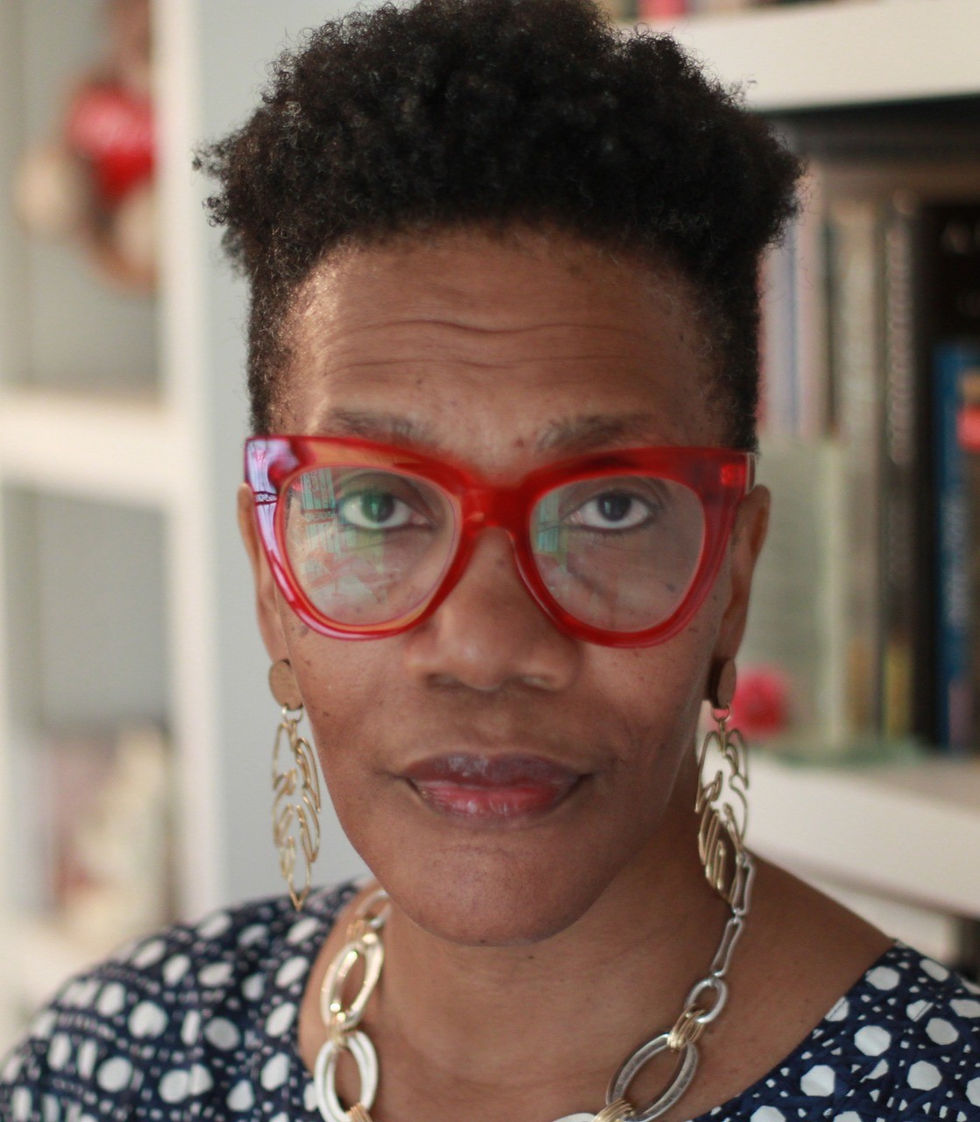
Angela Jackson-Brown is an award-winning writer, poet, and playwright. Her novels include Untethered, When Stars Rain Down, The Light Always Breaks, Homeward, and Drinking from a Bitter Cup. Her poetry collection, House Repairs, won the 2021 Alabama Authors Award in poetry from the Alabama Library Association. She was also a finalist for the 2022 Indiana Authors Award. Her short fiction, creative nonfiction, and poetry have appeared in numerous literary journals, including The Louisville Review and Appalachian Review. Her plays have been included in the IndyFringe DivaFest, the Indiana Bicentennial Celebration at the Indiana Repertory Theatre, and OnyxFest. She holds an MFA in Writing from Spalding University as well as degrees from Troy University and Auburn University. Visit her website at www.angelajacksonbrown.com.